Leafline
Civic Issue Reporter
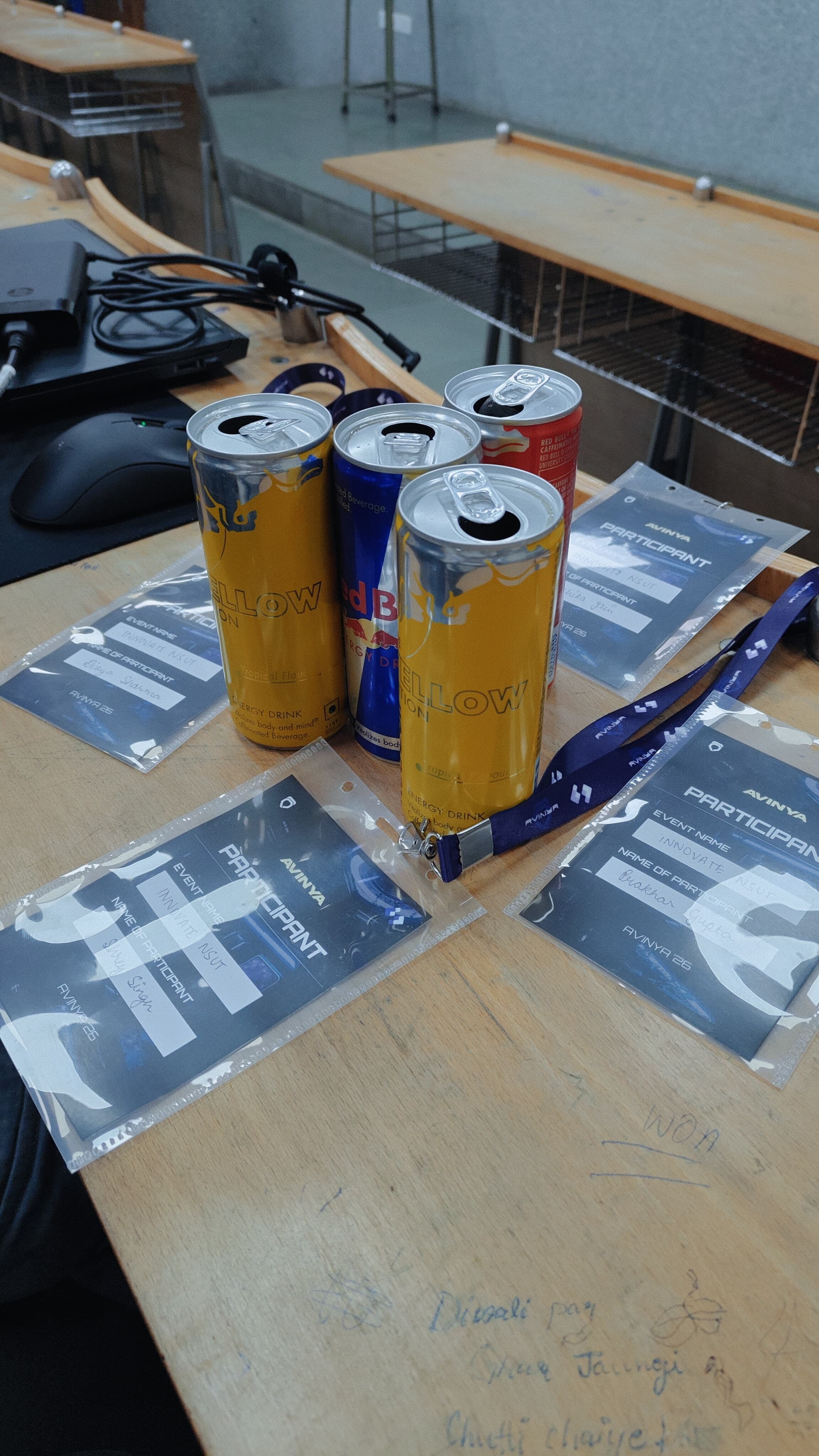
// Overview
Leafline is the original proof-of-concept that inspired JanSamadhan. Built in 24 hours for the InnovateNSUT Hackathon, Leafline parses photos of municipal issues (e.g. potholes, broken street lights), resolves GPS coordinates, and runs descriptions and image labels through high-speed LLM JSON interfaces to extract damage severity and route details directly to repairing departments. It won 1st Place out of dozens of competing engineering projects.
// The Hackathon Challenge
During the hackathon, the core challenge was to build a system that could intelligently classify and route arbitrary civic reports without needing months of training data for a custom ML classifier. We wanted to build something that was immediately functional for a city manager, with zero warm-up time.
To make the MVP viable under extreme time constraints, we decided to leverage generative vision models but faced a problem: typical cloud model API latency (e.g. GPT-4V) took anywhere from 2 to 5 seconds per request. This would make live judging and real-time dashboard interaction extremely sluggish.
// Technical Solutions & Architecture
#
// 1. Ultra-Low Latency Inference with Groq
```json
{
"category": "road_damage",
"severity": "high",
"required_equipment": ["asphalt", "roller"]
}
```
#
// 2. Taxonomy-Guided Dynamic Routing
#
// 3. Interactive Web Dashboard
// Key Takeaways
Leafline proved that LLMs could perform high-velocity classification tasking on civic data. It became the technological bedrock for JanSamadhan, leading to a live Delhi ward pilot deployment.
24-Hour Scoping Constraint
Building a fully functional reporter, dashboard, and routing engine within a day. Chose the Groq API for near-instantaneous JSON inference to ensure real-time responsiveness during judging.
Smart Routing without ML Models
Categorizing and routing complaints dynamically without training a custom machine learning classifier. Solved by configuring Groq LLMs with structured prompts and strict department taxonomies.